

Introduction

Creating a financial plan is both a necessity and a requirement. If you don’t take charge of your finances, they will take charge of you! There are a multitude of people who face financial problems as a result of not having any clear direction because they do not know how much money they actually spend or earn. If you follow this step by step guide on how to properly budget, spend and save your hard earned money; you will be creating a road map for yourself that consists of the following components.
Concept of Personal Finance Planning
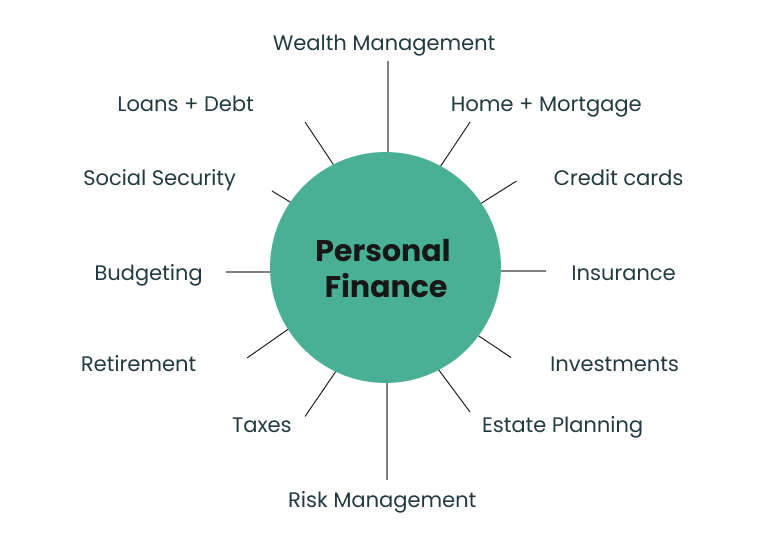
Personal finances are defined as the way individuals manage their earnings, spending, saving and investment activities. The main purpose of understanding personal finances is to establish an effective strategy to manage the various aspects of your personal finances so that they work for you rather than against you.
Components of Personal Finance Planning Include:
* Budgeting
* Consistent savings programs
* Maintaining debts
* Making reasonable investments
* Establishing future goals
If you do not create an effective plan to manage your financial resources, there is a good chance that you will find yourself with little or no financial resources at some point in the future;
1: Determine Specific Financial Goals
Determining what financial goals you would like to achieve will help you determine how to develop a financial plan. Most individuals do not take time to develop a plan, thus wasting money.
You should break down your financial goals into three separate groups:
1. Short-term goals – (within 1 year)
– To pay off your small debts
– To build an emergency fund
– To begin a savings account for future purchases.
2. Medium-term goals – (1 to 5 years)
– To purchase a vehicle
– To create a business plan
– To find additional sources of income
3. Long-term goals – (greater than 5 years)
– To have enough money for retirement
– To be financially independent
– To own property.
Your financial goals need to be very specific, such as “I want to save $2000 in the next 6 months” not “I want to save money”
2: Establish a Viable Budget.
Your budget is the basis of financial planning. A budget tells you where you stand with your finances, while guessing is just that — it will only result in you making bad decisions about your finances.
To create your budget, you can use this simple system – 50% (needs – housing, food, utilities), 30% (wants – entertainment, hobbies), 20% (savings/investment)
If you struggle to make ends meet, adjust it again. You need to track your spending closely.
The plain truth is if you do not track spending, you have already lost money.
3: Establish an Emergency Fund.
Unexpected expenses always arise. Medical bills, job loss, or other emergencies can happen without warning. Without an emergency fund, you will likely incur debt.
So what amount should be in your emergency fund? 3 to 6 months of living expenses.
You must start saving little by little, either weekly or monthly, in a separate account (do not access until you absolutely have no other option).
Your emergency fund is your financial cushion.
4: Manage and Eliminate Your Debt.
Debt is one of the biggest obstacles to your financial success.
Types of Debt;
Bad debt (credit cards and other high-interest loans), and Good Debt (business or educational loans that are used correctly).
Ways To Pay Off Your Debt;
Method 1 – Snowball Method – begin with paying off your smallest debt first to feel a sense of progress to encourage you to pay down your other debt.
Method 2 – Avalanche Method – begin paying off the highest-interest loan first to save you money.
Do not make this mistake when paying down debt — taking new debt while trying to pay off old debt will erase all of the progress you have already made.
5: Begin to Save and Invest Early
You cannot simply depend on saving at a bank for income. Inflation will always eat away at the value of any saved dollar amount over time. Therefore, you will have to invest to grow the amount of money you now have.
The difference between Saving and Investing
“Saving” is a way to keep your money safe; “Investing” is a method of growing your wealth.
Some investment options include:
– Stocks
– Mutual Funds
– Real property
– Small Business
When you start saving or investing is much more critical than how much you save or invest. Starting earlier will produce significantly better financial results than starting later.
6: Track and Improve Your Cash Flow
Cash flow = Money you receive (income) – Money you spend (expenses)
If your total expenses are greater than your total income you have a cash flow problem. The only way to remedy this is by:
– Reducing your discretionary purchases
– Increasing your income (through part-time jobs or businesses)
– Not allowing lifestyle inflation.
Many times, after receiving a raise, some people experience an increase in their standard of living as a result of their increased cash flow.

7: Protect Your Financial Future
Financial planning involves earning money, saving it, and protecting it.
How will you protect your financial future? Some items to consider include:
– Health Insurance
– Life Insurance (if you have dependents)
– Safe Savings Account with a reputable financial institution
One mistake can undo months or years of hard work and accomplishment.
Some financial mistakes to avoid when trying to accomplish your goals:
– Not Using a Budget
– Living Too Closely to Your Financial Means
– Ignoring Debt
– Waiting Too Long to Make Investments
– Relying on Only One Income Source
Many individuals make common and costly mistakes with their financial planning. Following these five practical tips will help you develop a solid financial plan: 1) Track your daily spending, 2) Pay yourself before you pay bills or other expenses, 3) Do not buy items on an impulse; 4) Create automatic savings plans, and 5) Review your financial situation each month.
Motivation can’t beat consistency.
In summary, although personal financial planning is relatively simple, it does require discipline. Habits determine whether someone has financial stress or financial freedom, not luck.
If you take these five steps to reach your financial goals—as defined by: You know what you want, you have a budget, you are regularly saving, you avoid buying on credit and you invest your money wisely—you will establish a solid future for yourself and your family.